
PXe-LC Series AC High Current Calibrator
PXe-110001.2LC
PX Electronics PXe-LC Series AC High Current Calibrators provide programmable low-voltage, high-current AC output for current injection, calibration, verification and electrical component testing.
The series is available with 5V or 10V compliance-voltage configurations, with output-current ratings extending to 600A AC. This allows the source to be selected around both the required test current and the impedance of the complete test circuit.
Output frequency is programmable from 40Hz to 500Hz, supporting standard 50Hz and 60Hz calibration, as well as 400Hz and higher-frequency current testing. Linear amplification provides a controlled sine-wave current source for applications where waveform quality and repeatable operating conditions are important.
Typical applications include current transformer and current sensor testing, ammeter verification, current injection, shunt testing, relay and circuit-breaker verification, conductor and busbar testing and laboratory development.
Technical Highlights for High Current Calibration
High Current Output up to 600A AC
The PXe-LC Series is available in multiple current ratings from 100A to 600A AC, allowing the source to be matched to current-measurement devices, protection equipment and low-impedance test circuits.
5V & 10V Compliance Voltage Options
Select 5V or 10V compliance according to the required current and total test-loop impedance, including the device under test, connecting leads, terminals and reference measurement equipment.
40 to 500Hz Programmable Frequency
Supports calibration and verification at standard 50Hz and 60Hz frequencies together with 400Hz and wider-frequency evaluation up to 500Hz.
Linear, Low-Distortion Current Source
Linear amplification provides controlled sine-wave generation without a conventional PWM output stage. The existing 1.2kVA / 120A configuration has a published THD of 0.8% with a resistive load.
Integrated Measurement & Remote Control
Selected configurations provide local electrical measurement and RS485 Modbus communication for laboratory systems, automated calibration rigs and production test installations.
Product Information
PXe-LC Series Configuration
The PXe-LC Series is a family of linear AC current sources designed around low-voltage, high-current test applications.
Two compliance-voltage families are available:
- 0–10V AC compliance, with current ratings from 100A to 300A
- 0–5V AC compliance, with current ratings from 100A to 600A
The compliance voltage is the maximum voltage available to drive the programmed current through the complete test loop. This includes the device under test, output cables, terminals, connectors and any reference measurement equipment.
The appropriate LC configuration therefore depends on both required current and total circuit impedance.
0–10V Compliance Series
The 10V series provides additional voltage capability for test circuits where lead resistance, terminals or the device under test require more voltage to establish the required current.
| Power Rating | Compliance Voltage | AC Current Range |
|---|---|---|
| 1kVA | 0–10V AC | 0–100A |
| 1.2kVA | 0–10V AC | 0–120A |
| 1.5kVA | 0–10V AC | 0–150A |
| 2kVA | 0–10V AC | 0–200A |
| 2.5kVA | 0–10V AC | 0–250A |
| 3kVA | 0–10V AC | 0–300A |
0–5V Compliance Series
The 5V series is intended for very low-impedance test circuits where higher current is required, but the voltage needed across the complete loop remains below 5V.
| Power Rating | Compliance Voltage | AC Current Range |
|---|---|---|
| 500VA | 0–5V AC | 0–100A |
| 1kVA | 0–5V AC | 0–200A |
| 1.5kVA | 0–5V AC | 0–300A |
| 2kVA | 0–5V AC | 0–400A |
| 2.5kVA | 0–5V AC | 0–500A |
| 3kVA | 0–5V AC | 0–600A |
Understanding Compliance Voltage
The maximum current rating can only be achieved where the total test-loop impedance allows the programmed current to be established within the available compliance voltage.
For example, a 600A / 5V configuration has up to 5V available to overcome the combined impedance of:
- The device under test
- Output cables
- Terminations
- Contact resistance
- Current reference equipment
- Any additional series components
Lead length, conductor cross-section and connection quality therefore become increasingly important at higher current.
Where the test circuit requires more than 5V at the required current, a 10V configuration or another system arrangement should be considered.
Frequency Control
Output frequency is programmable from 40Hz to 500Hz, allowing current injection and calibration at:
- 50Hz
- 60Hz
- 400Hz
- Other defined test frequencies within the available range
Linear Amplification
The PXe-LC uses linear amplification rather than a conventional switched PWM output stage.
For the existing 1.2kVA / 120A model, the published specification gives a pure sine-wave output with 0.8% THD at resistive load.
Local Measurement & Communication
The established 1.2kVA / 120A configuration provides front-panel indication of:
- Voltage
- Current
- RMS current
- Frequency
- Power
- Power factor
It also includes RS485 Modbus for computer, PLC and automated-test integration.
Equivalent measurement and communications requirements for other ratings should be confirmed when the system is specified.
Selecting a PXe-LC AC High Current Calibrator
The correct PXe-LC configuration should be selected around the required current, compliance voltage, operating frequency and complete test-loop impedance.
Current rating alone is not sufficient to determine the correct system.
PX will normally need:
- Maximum required AC current
- Minimum and maximum operating current
- Required frequency or frequency range
- Expected voltage required across the device under test
- Device-under-test impedance, where known
- Test-lead length
- Test-lead conductor size
- Connection and termination method
- Additional series resistance or impedance
- Required test duration
- Continuous or intermittent duty
- Local or remote operation
- RS485 / Modbus requirements
- Required measurement functions
- Calibration or traceability requirements
- Installation environment
- Selecting 5V or 10V Compliance
Choose the compliance-voltage family according to the voltage required to maintain the programmed current through the complete test loop.
5V compliance configurations are suited to very low-impedance circuits and provide current ratings up to 600A AC.
10V compliance configurations provide additional voltage headroom where cable resistance, terminations or the device under test require a higher driving voltage, with current ratings up to 300A AC.
Where the test-loop impedance is uncertain, PX can review the proposed cables, current, DUT and operating duty before confirming the appropriate configuration.
High-Current Output Connections
At several hundred amps, the output leads and connections form an important part of the test system.
Cable resistance and termination resistance should be kept as low as practical. Output conductors should be selected for:
- Maximum test current
- Test duration and duty cycle
- Permitted temperature rise
- Cable length
- Flexibility and handling requirements
- Connection method
The test lead arrangement should therefore be defined at quotation stage rather than treated as a generic accessory.
Calibration Applications
Where the PXe-LC is to be used as part of a formal calibration system, the required uncertainty, reference standard and traceability arrangement should be defined separately.
The internal display and measurement functions are useful for setting and monitoring the source, but they should not automatically be treated as the traceable reference measurement for a formal calibration procedure.
PXe-LC Series Technical Specification;
Available Output Configurations:
| Power Rating | Compliance Voltage | Maximum AC Current | Frequency Range |
|---|---|---|---|
| 500VA | 0–5V AC | 100A | 40–500Hz |
| 1kVA | 0–5V or 0–10V AC | 200A at 5V / 100A at 10V | 40–500Hz |
| 1.2kVA | 0–10V AC | 120A | 40–500Hz |
| 1.5kVA | 0–5V or 0–10V AC | 300A at 5V / 150A at 10V | 40–500Hz |
| 2kVA | 0–5V or 0–10V AC | 400A at 5V / 200A at 10V | 40–500Hz |
| 2.5kVA | 0–5V or 0–10V AC | 500A at 5V / 250A at 10V | 40–500Hz |
| 3kVA | 0–5V or 0–10V AC | 600A at 5V / 300A at 10V | 40–500Hz |
Series rating note: The required current must be achievable within the available compliance voltage of the selected model. Test-loop impedance, cable resistance, connection resistance and duty cycle should be considered during system selection.
PXe-110001.2LC Reference Technical Performance:
The following detailed performance data applies to the established 1.2kVA / 120A / 10V configuration. Equivalent detailed specifications for other PXe-LC ratings are confirmed at quotation.
| Specification | PXe-110001.2LC |
|---|---|
| Capacity | 1.2kVA |
| Input | 230V AC ±10%, single-phase |
| Input Frequency | 47–63Hz |
| Output Voltage / Compliance | 0–10V AC |
| Output Current | Up to 120A AC |
| Output Frequency | 40–500Hz, programmable in 0.1Hz steps |
| Circuit Mode | Linear amplification technology |
| Waveform | Pure sine wave |
| Total Harmonic Distortion | 0.8% at resistive load |
| Voltage Regulation | ±0.1% |
| Load Regulation | ±0.5% |
| Voltage Resolution | 0.1V |
| Current Resolution | 0.001A |
| Frequency Measurement Resolution | 0.01Hz |
| Voltage Measurement Accuracy | 0.5% FS + 5 digits |
| Current Measurement Accuracy | 0.5% FS + 5 digits |
| Power Measurement Accuracy | 0.8% FS + 5 digits |
| Frequency Measurement Accuracy | 0.01% FS + 5 digits |
| Voltage Setting Accuracy | 0.5% FS |
| Frequency Setting Accuracy | 0.1% FS |
| Display | Voltage, current, RMS current, frequency, power and power factor |
| Communication | RS485 Modbus |
| Protection | Overcurrent, overtemperature, short circuit and overload |
| Enclosure | IP20 |
| Operating Temperature | 0°C to 40°C |
| Relative Humidity | 20% to 95% RH |
| Dimensions | 430 × 550 × 440mm |
| Weight | 60kg |
Specification note: Detailed dimensions, weight, input requirements, resolution, accuracy and regulation for the other PXe-LC ratings are confirmed at quotation.
No matching FAQs found.
An AC High Current Calibrator provides a controlled AC current for calibration, verification and electrical testing.
The PXe-LC Series is intended for low-voltage, high-current applications where the principal requirement is to establish a defined AC current and frequency through the device under test.
Typical applications include current transformers, current sensors, ammeters, shunts, protection relays, circuit breakers, busbars, cables, conductors and other low-impedance electrical components.
PXe-LC Series configurations are available up to 600A AC.
The 10V compliance family provides ratings from 100A to 300A, while the 5V compliance family provides ratings from 100A to 600A.
Compliance voltage is the maximum voltage the current source can develop in order to maintain the programmed current through the connected circuit.
The required voltage depends on the combined impedance of the device under test, output leads, terminals and other series components.
A 5V model is suitable where the complete test circuit has very low impedance and no more than 5V is required to establish the desired current.
A 10V configuration provides additional voltage capability where cable resistance, terminals or the device under test require greater voltage.
PX can review the proposed current and test-loop impedance before confirming the appropriate configuration.
PX will normally need the required current, compliance voltage or expected test-loop impedance, operating frequency, test duration, duty cycle, lead length, connection method and any measurement, remote-control or calibration requirements.
Output frequency is programmable from 40Hz to 500Hz, allowing operation at 50Hz, 60Hz, 400Hz and other test frequencies within the available range.
Yes.
The programmable high-current output makes the PXe-LC suitable for AC current-injection applications, provided the required current can be achieved within the compliance-voltage capability of the selected model.
At high current, even a small amount of resistance produces a significant voltage drop.
Cable length, conductor cross-section, terminals and connection resistance all consume part of the available compliance voltage. Keeping the test leads appropriately sized and as short as practical helps maximise the voltage available across the device under test.
The established 1.2kVA / 120A configuration includes local measurement of voltage, current, RMS current, frequency, power and power factor together with RS485 Modbus communication.
Measurement and communications requirements for other current ratings should be confirmed when the system is specified.
The PXe-LC provides a controlled high-current source suitable for use within calibration and verification systems.
Where formal traceable calibration is required, a suitable reference standard and measurement uncertainty should be defined separately. The internal display should not automatically be treated as the traceable reference instrument.
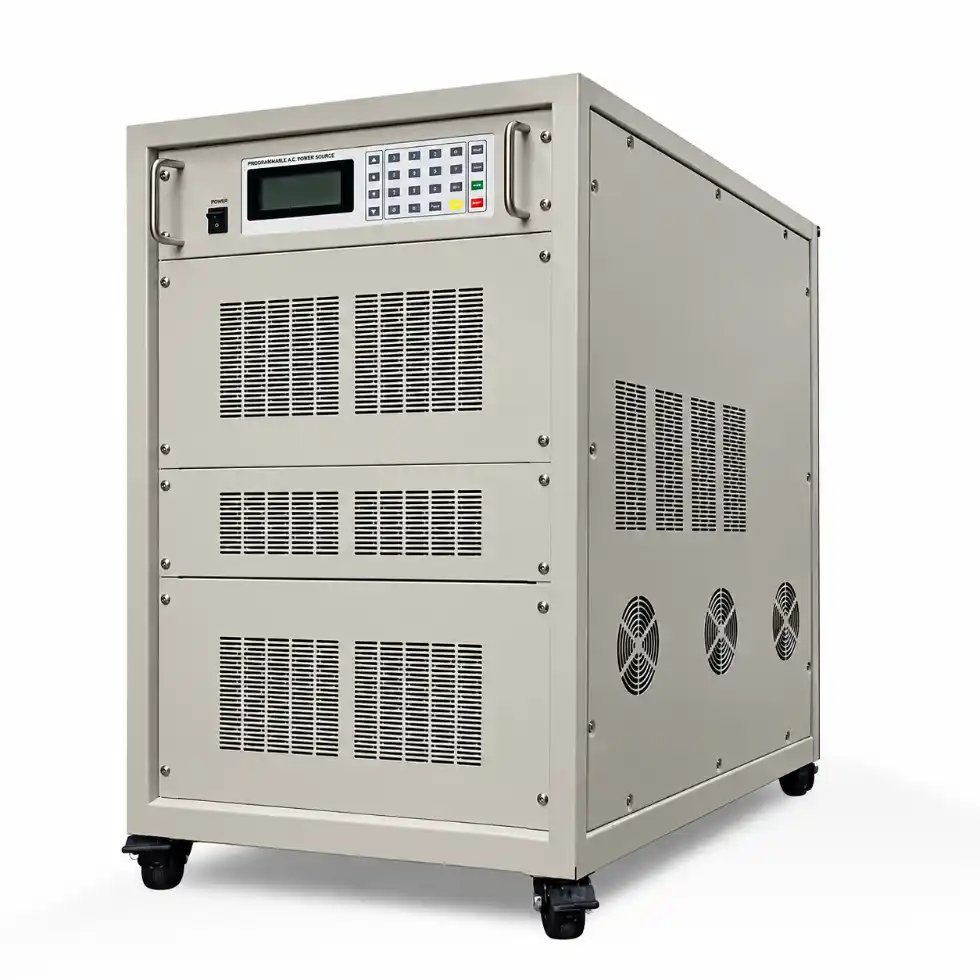
PXe-270DC Series 270Vdc Aircraft Power Supplies
PXe-270DC-000
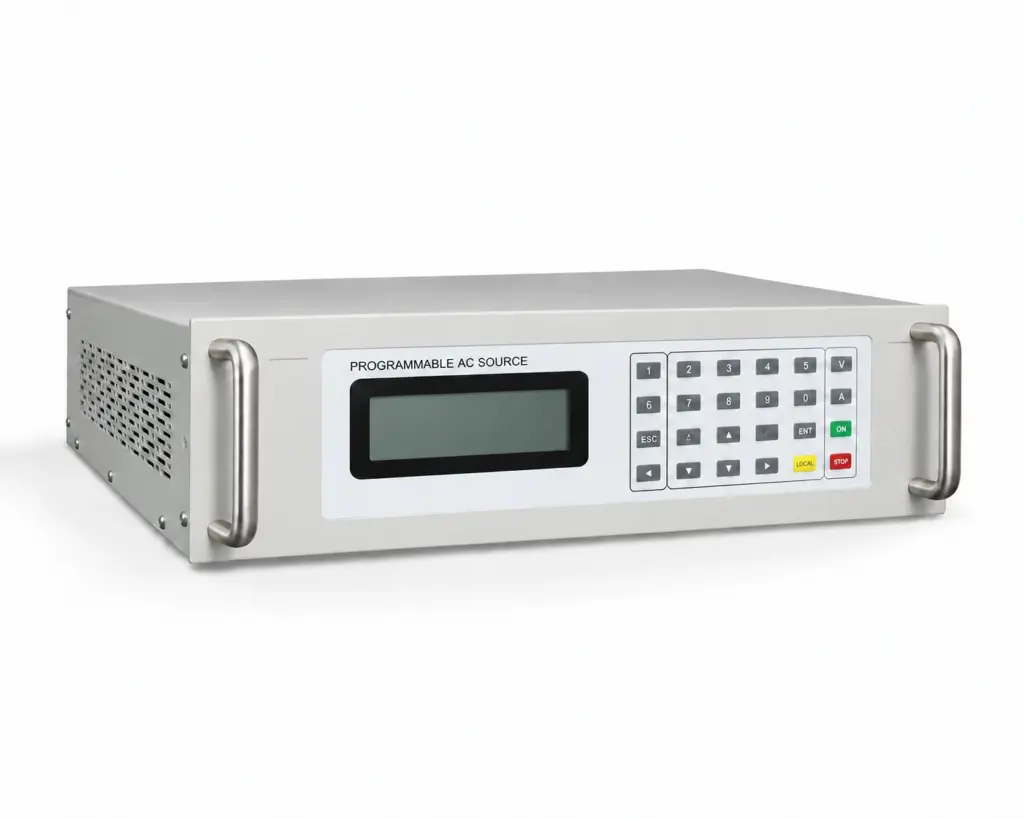
PXe-A Series Variable AC Power Supplies
PXe-130000-A
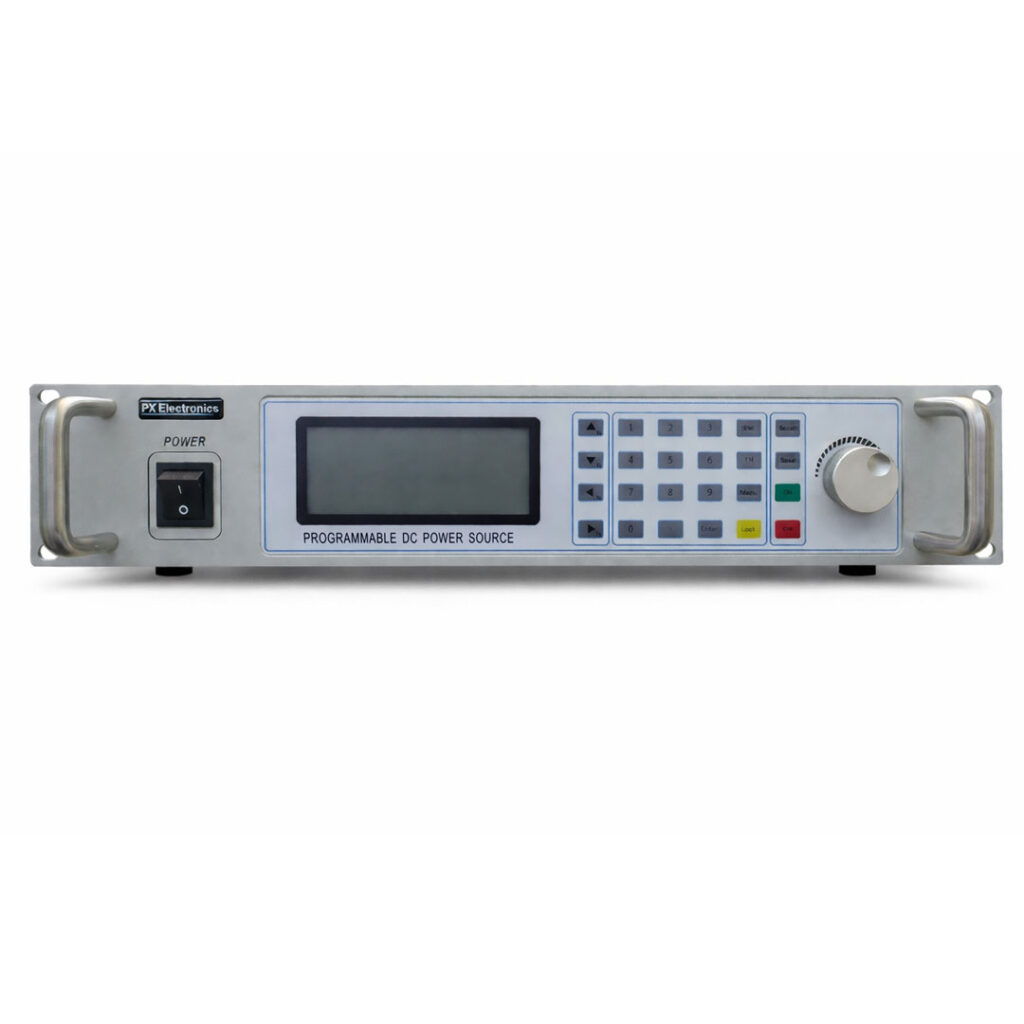
PXe-AC/DC Series AC-DC & DC-AC Static Power Converters
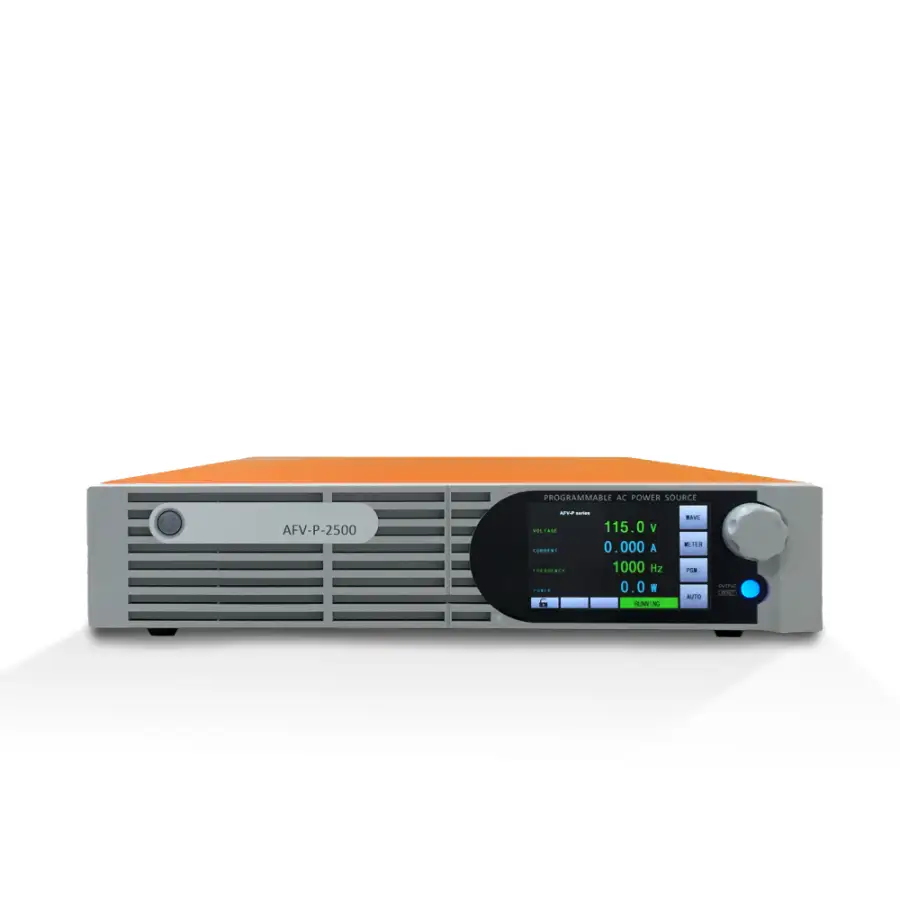
PXe-AFV-P Programmable AC Power Source
PXe-AFV-P-0000
PXe-BLS Dual Redundant AC Power Supplies
PXe-BLS-00
PXe-D Series Programmable DC Power Supplies
PXe-D-00-000 Series