
SFC Monitoring, Safety & Switching Options
PX Electronics supplies monitoring, safety and switching options for Static Frequency Converter systems where additional control, protection, redundancy or remote visibility is required.
These options are typically specified alongside a Static Frequency Converter project rather than selected as isolated catalogue items. They can include PLC watchdog monitoring, automatic changeover switching, SFC bypass arrangements, remote alarms, communication interfaces, enclosure upgrades and site-specific installation options.
The correct option depends on the converter rating, connected load, operating environment and how critical the AC output is to the customer’s process or equipment.
Choosing the Correct SFC Option
The correct option depends on the converter rating, connected load, operating environment and how critical the AC output is to the customer’s process or equipment.
| Option Type | Best Suited To | Typical Requirement | PX Option |
|---|---|---|---|
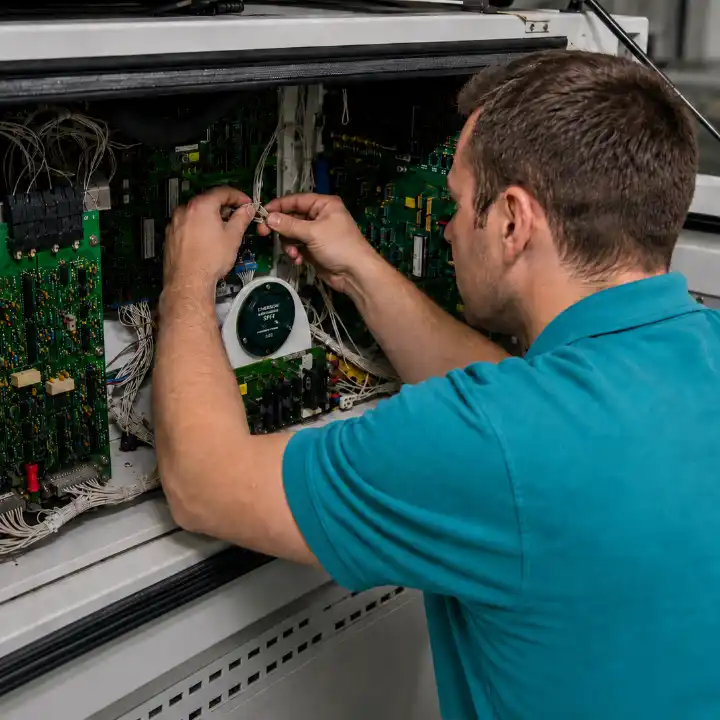
| PLC Watchdog Monitoring | Larger SFC systems, remote installations and critical equipment | Remote status, alarms, fault visibility and automatic response logic | PLC Watchdog |
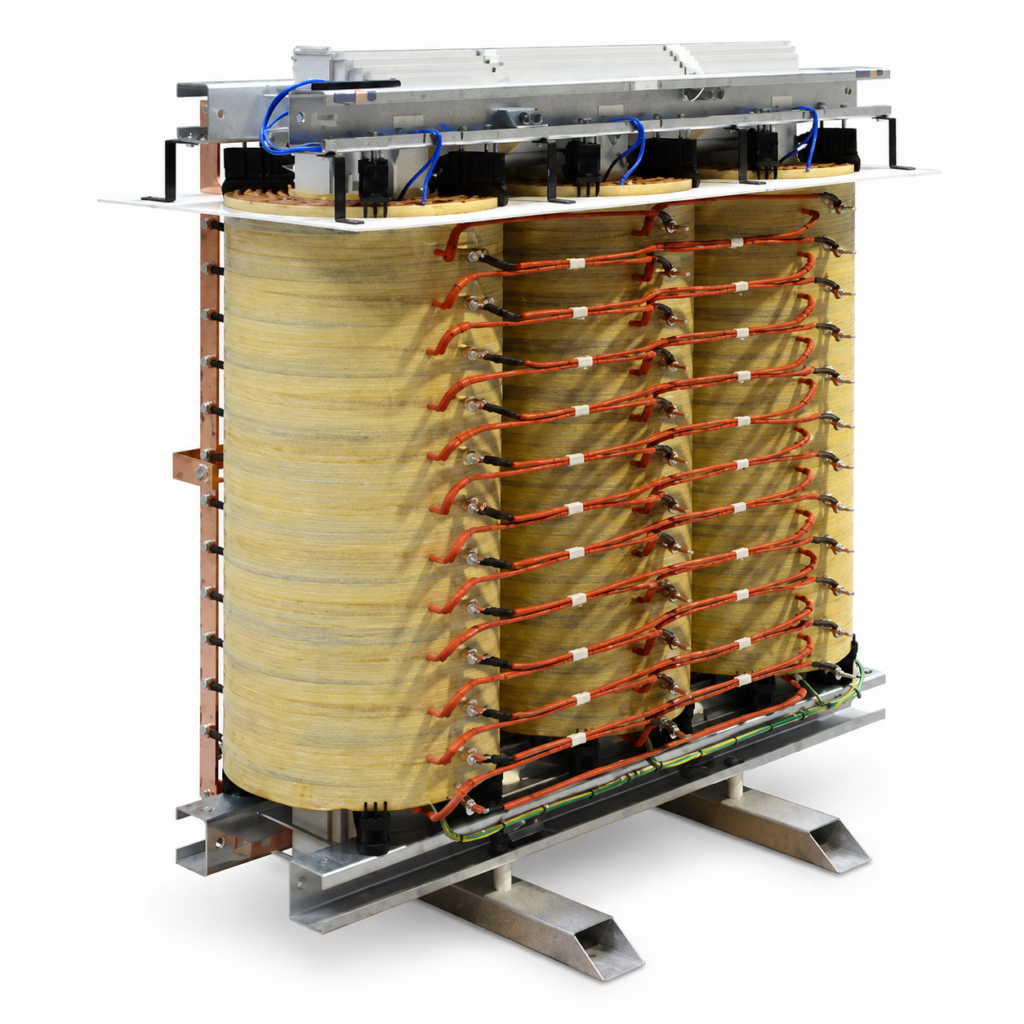
| SFC Safety & Installation Options | Configured converter projects and non-standard environments | Enclosure, cooling, communications, cable entry and protection upgrades | SFC Options |
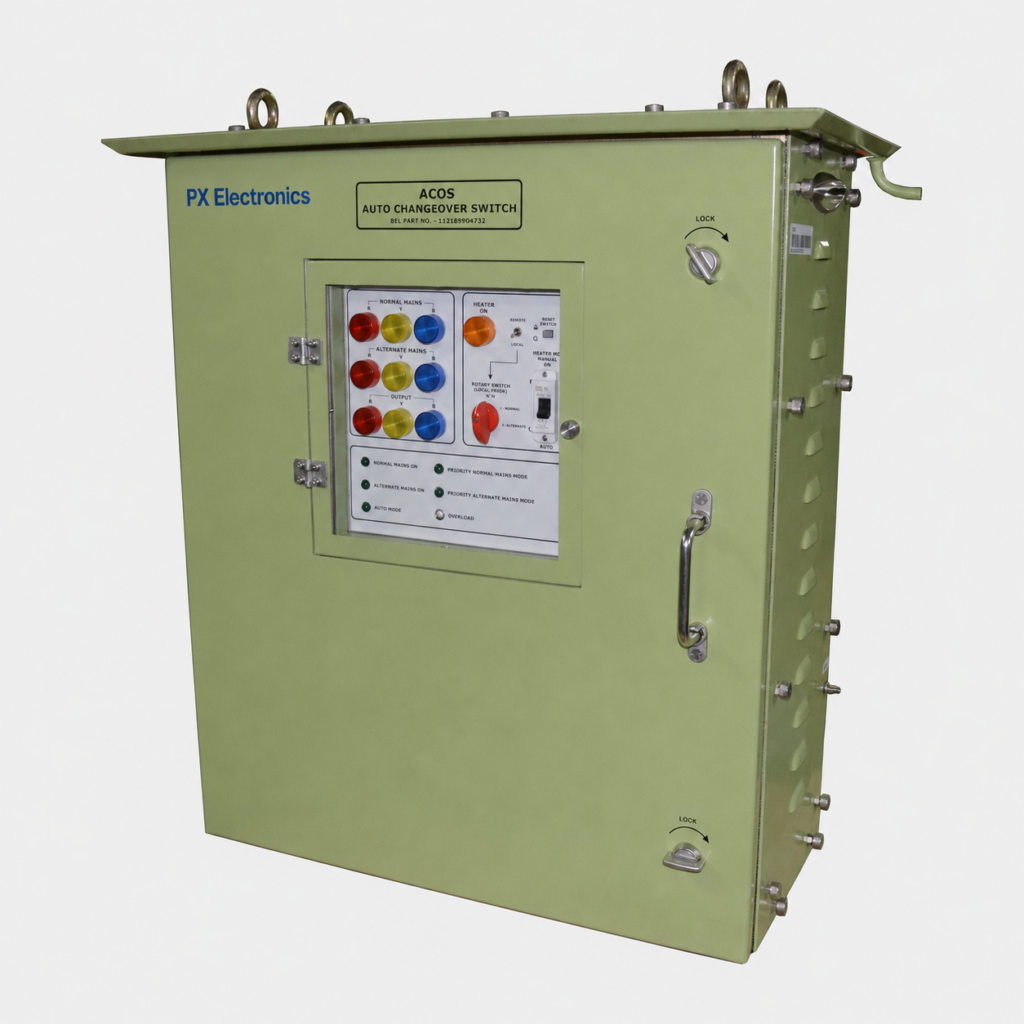
| Automatic Changeover Switching | SFC bypass, standby supply and resilient AC power arrangements | Automatic transfer between compatible AC sources | ACOS |
Available SFC Monitoring, Safety & Switching Options
View the current PX Electronics SFC Monitoring, Safety & Switching Options product range below. Each product can be configured around the required input supply, output voltage, frequency, load type and installation environment.
Core Capabilities
Remote Monitoring and Alarm Visibility
Watchdog and communication options can provide remote visibility of SFC operating state, alarm condition and fault status.
Automatic Source Changeover
ACOS devices can transfer between compatible AC sources, helping support bypass, standby or primary and secondary supply arrangements.
SFC Bypass and Redundancy Support
Switching options can be specified where the installation requires an alternative supply path, maintenance isolation or automatic transfer between available sources.
Installation-Specific Configuration
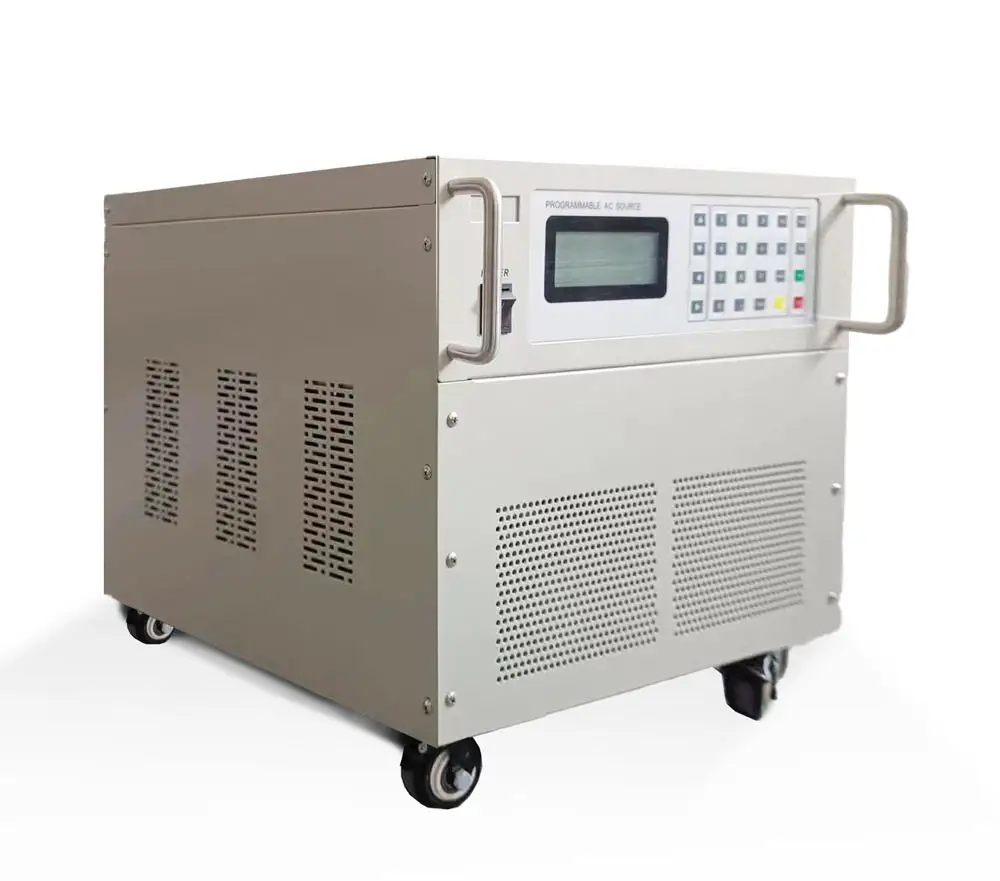
SFC options can include enclosure upgrades, cooling arrangements, cable entry, connectors, mobility features and environmental protection.
Communication and External Control
Selected systems can include RS232, RS485, Ethernet, Modbus, volt-free contacts, digital I/O or other project-specific control interfaces.
Project Documentation and Testing
Factory test records, Certificates of Conformity, customer witness testing and additional project documentation can be supplied where required.
Typical Applications
SFC monitoring, safety and switching options are used where converter operation needs to be supervised, integrated or protected as part of a wider electrical system. Typical applications include:
- Static Frequency Converter monitoring
- Remote SFC installations
- Critical-load SFC systems
- 400Hz aircraft power systems
- SFC bypass arrangements
- Primary and standby AC source selection
- Automatic changeover between compatible AC supplies
- Factory and production power systems
- Defence and aerospace power installations
- Marine and offshore electrical systems
- Rail and transport auxiliary power
- Utilities and infrastructure sites
- Test facilities and laboratories
- Customer witness test installations
- High-value equipment protection
- Sites requiring remote alarms or operating status
SFC Option Selection Guidance
Monitoring and switching options are usually considered when the SFC is part of a critical process, remote installation or higher-power system. A small bench converter may only need local metering and standard protection. A larger SFC feeding production equipment, aircraft support systems or remote infrastructure may need remote alarms, external control, automatic restart logic, additional cooling, environmental protection or automatic changeover to an alternative supply. PX Electronics will normally review:
- SFC rating and output configuration
- Input and output voltage
- Output frequency
- Connected load type
- Criticality of the load
- Required response to alarms or faults
- Need for remote monitoring
- Communication protocol
- External I/O requirements
- Bypass or standby supply arrangement
- Indoor or outdoor installation
- Ambient temperature and dust level
- Cooling and filter requirements
- Cable entry and termination method
- Test and documentation requirements
The earlier these requirements are identified, the easier they are to build into the final system design.
Why Choose PX Electronics for SFC Monitoring & Switching Options?
PX Electronics supplies configured Static Frequency Converter systems, so monitoring and safety options can be reviewed as part of the complete power conversion package.
This matters because watchdog monitoring, automatic changeover switching and SFC bypass arrangements need to match the converter, the connected load and the site supply. A changeover device for a 400Hz aircraft power system is not specified in the same way as a bypass arrangement for a 50Hz industrial converter.
PX can help define the correct monitoring, switching, communication and protection options during the specification stage. This reduces the risk of adding external controls later that do not properly match the converter or the site electrical arrangement.
SFC Monitoring & Switching FAQs
What is SFC watchdog monitoring?
SFC watchdog monitoring provides additional supervision of a Static Frequency Converter. Depending on the configuration, it can monitor operating status, alarms, faults and selected system conditions.
When is PLC watchdog monitoring useful?
PLC watchdog monitoring is useful where the SFC is installed remotely, supports a critical load, or needs to provide alarm and status information to a wider control system.
Can the watchdog system send remote alarms?
Remote alarm functions can be configured where required. The available notification method depends on the selected hardware, communication arrangement and site requirements.
Can an SFC be automatically restarted after a fault?
Automatic restart logic may be possible for selected fault conditions, but it must be assessed carefully. Some faults should require manual inspection before restart, particularly where the connected load or installation may be unsafe.
What is an ACOS automatic changeover switch?
An ACOS automatic changeover switch transfers a load between two compatible AC sources. It can be used for SFC bypass, primary and standby source selection, or transfer between alternative AC supplies.
Can ACOS be used with 400Hz systems?
Yes. ACOS switching devices can be configured for 50Hz, 60Hz and 400Hz applications, provided the source and load requirements are defined correctly.
Can a changeover switch provide an SFC bypass?
Yes, where a suitable alternative supply is available. The bypass source must match the load requirement for voltage, frequency, phase arrangement and capacity.
What is the difference between mechanical and static changeover?
A mechanical changeover uses contactors or switching devices to transfer between sources. A static changeover uses semiconductor switching for faster transfer where source synchronisation and application requirements allow it.
Is a bypass always possible?
No. A functional bypass is only possible where an alternative supply exists with the correct voltage, frequency, phase arrangement and capacity. For example, a 400Hz SFC cannot normally be bypassed directly to a standard 50Hz mains supply.
What SFC options are available?
Options can include upgraded IP rating, conformal coating, filtered fan intake, remote communication, volt-free contacts, external I/O, special connectors, mobile bases, cable assemblies, harmonic mitigation and factory test documentation.
What information is needed to specify these options?
PX Electronics will need the SFC rating, input and output supply details, load type, required control method, alarm requirements, communication protocol, installation environment, bypass arrangement and documentation needs.
Need help specifying SFC monitoring or switching options?
Contact PX Electronics for product advice, specification support or a quotation for your application.